
By, Kenny Gary, CEO + Founding Partner, LIMELIGHT
Last week in London, I walked into LegaltechTalk 2026 expecting a conference, but what I got was something closer to a legal industry fever dream — in the best possible way.
First: The Setting
The InterContinental O2 sits right on the Thames in Greenwich. Glass, steel, water views, and a design that makes you feel like whatever you’re doing matters. It’s the kind of venue that quietly tells attendees: we took this seriously, and you should too.
It worked.
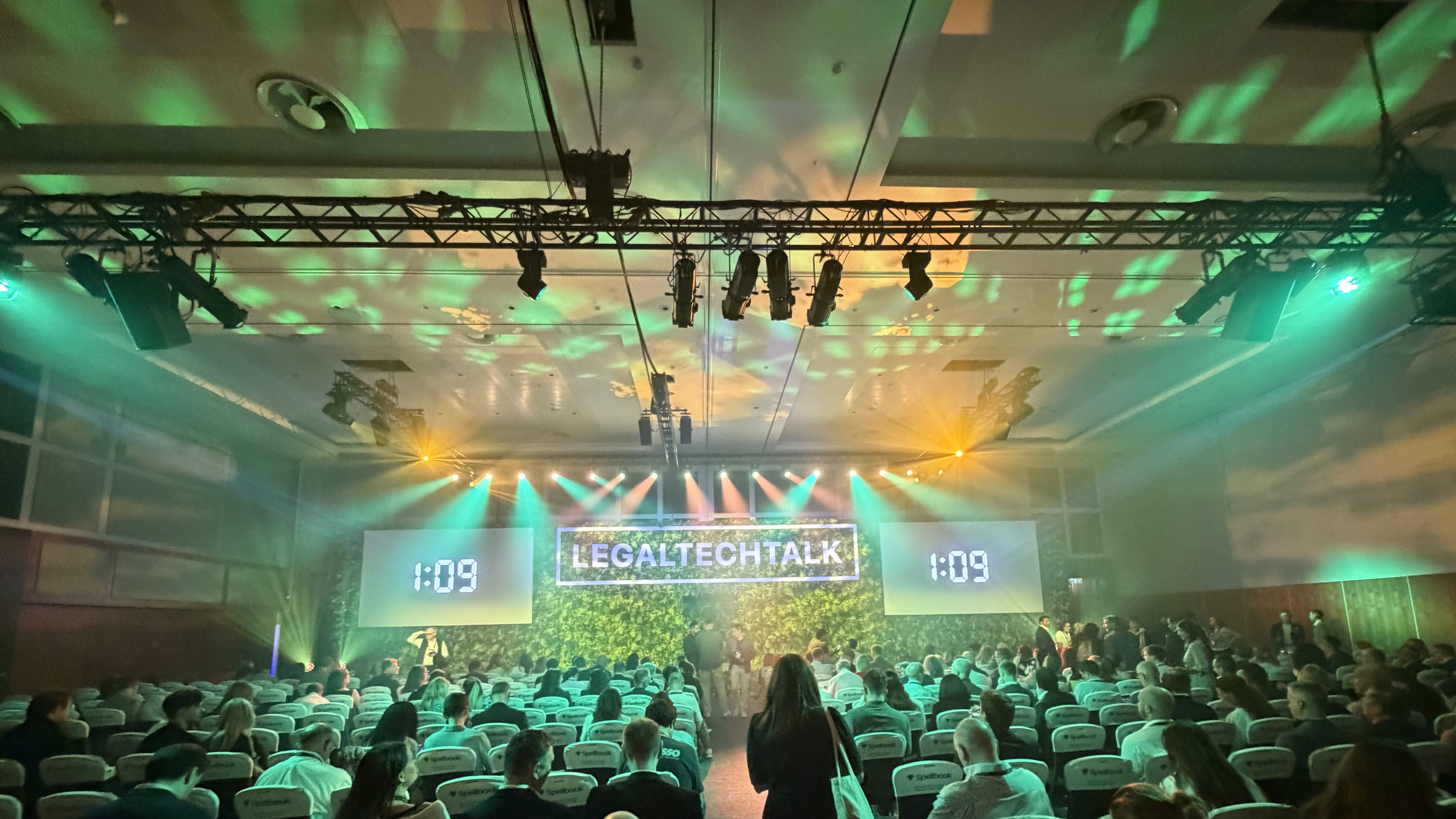
Over 5,000 attendees and 400our speakers. Eight stages running simultaneously. And a reported north of 20,000 pre-scheduled 1:1 meetings compressed into 48 hours. That’s not a conference. That’s an industry in motion.
LTT Is Not a Conference. It’s a Festival.
Here’s the thing LegaltechTalk figured out that most legal events haven’t: people engage more when they’re enjoying themselves.
So they leaned in.
Juice bars and barista stations woven between exhibitor booths. Massage stations. A nail bar. A beauty lab. Live music threading through the hall all day. Cocktail bars, mocktail bars, ice cream makers, and at least one booth where “stopping by” meant getting handed something even colder and more interesting. Our friends at Stella Legal and flank hosted poker tournaments rooted in decision-making lessons throughout the day. Exhibitors brought food, hospitality, and genuine effort to make you want to linger… including a custom suitmaker, Sonny, who I remain in close contact with.
And then there were the giants of legaltech.
Legora built their own pub. An actual pub.
Ivo hosted a massive jungle-themed cocktail bar which included everyone… and even a gorilla.
Augmetec featured some of the best bartender-entertainers I’ve seen since the days of Tom Cruise in the film “Cocktail”. Yes, in that same exhibit hall.
Clio provided fresh waffles and sponsored a beer garden on the trade show floor. Right next to the live music, which ran all day, every day.
Someone once called LegalTechTalk “the Met Gala of legaltech.” That framing is too still. This was Glastonbury. It was loud, layered, occasionally overwhelming, and absolutely where you needed to be if you take this industry seriously.
The Networking Was Engineered, Not Accidental
What separates LegalTechTalk from most events is that the networking isn’t ambient — it’s structural.
Pre-scheduled 1:1s. Curated roundtables. Side events layered on top of the main programming. An app-enabled meeting system that meant you could arrive with your two days already mapped. If you wanted to spend 48 hours in wall-to-wall conversations with GCs, CLOs, managing partners, and founders without sitting in a single session, you could.
I didn’t have time for the roundtables, but I did experience the power of 1:1 networking through the incredible event app, which directed me to a table top in the exhibit hall at a specific 15-minute window. I did it five times, and the contact arrived on time. This was a first for me at any legal event. That said, the programming was too good to skip entirely. But the options existed for even more connection-building, and that’s the point.
The room quality was exceptional. Senior in-house teams from global companies. Managing partners from elite UK and international firms. The CLOs of companies like Revolut and Airbnb. The founders building the tools that are actively rewriting how legal work gets done. The kind of people who usually require an introduction, a warm email, and a 6-week wait — all in one building, pre-scheduled and ready to talk.
Now For What Actually Mattered
The AI conversation at LegalTechTalk 2026 has shifted. Anyone who tells you otherwise wasn’t paying attention.
Three years ago, this industry was asking can AI do this? Two years ago, should we pilot it? Last week, the question was simply: why aren’t your implementations working, and what does it say about your organization that they’re not?
That’s a meaningful evolution. Here’s what I kept hearing:
The tech is not the problem. Across sessions and side conversations, the conclusion kept repeating: the limiting factor isn’t the AI. It’s the people and the culture around it. The firms winning at adoption aren’t deploying the most sophisticated tools — they’re starting by asking their lawyers a basic question: what actually frustrates you? What’s slow? What’s stupid? Then solving that, and letting the technology follow. This sounds obvious. Most firms still aren’t doing it.
Lawyers are drowning in tools. The appetite to add more to the stack is shrinking fast. Firms are becoming selective — ruthlessly so. What they want now is coherence: fewer, better-integrated products that actually talk to each other and reduce complexity rather than add to it. The implication for vendors is stark. Deep expertise in a specific workflow, or clean integration into the platforms already in the room — Harvey, Legora — will matter far more than broad capability. The era of “we do everything” is over.
AI is being graded on the wrong curve. One of the sharper observations from the Baker McKenzie side of the conversation: we keep benchmarking AI against perfection instead of against how legal work was actually done before. An associate might previously have reviewed a handful of comparable deals on a transaction. AI covers hundreds in the same window. That’s not a cheaper version of the old thing — that may be a fundamentally better service. Worth sitting with.
Governance has become the headline conversation. Following some high-profile AI stumbles in court filings this year, clients aren’t satisfied with policy documents anymore. They want specifics. Where is AI being used? Who reviews the output? Who is accountable if it goes wrong? Legal departments are increasingly being asked not just to approve AI decisions after the fact, but to help architect the governance structures that shape how these systems operate before anything is deployed. That’s a real and significant expansion of the function.
The billable hour isn’t dying. It’s getting uncomfortable. The debate isn’t about hourly billing disappearing — it’s about transparency. Clients aren’t demanding blanket alternative fee arrangements. What they’re demanding is clarity: what are we paying for, and what does it represent? One firm described giving away certain AI-generated outputs entirely and pricing instead around interpretation, curation, and expertise. That framework deserves attention.
And Then They Announced Miami
Saved the best for last.
At the close of the event, LegaltechTalk announced the U.S. expansion: LegalTechTalk USA, Dec. 13–15, 2027, at the Fontainebleau Miami Beach.
The Fontainebleau. In Miami. In December. Yes, please.
If that doesn’t land — the Fontainebleau is one of the most iconic luxury oceanfront hotels in the world. It’s the kind of venue choice that tells you immediately what the intent is. They’re not testing the US market with a modest debut. They’re announcing an arrival.
Early launch partners already include Cleary Gottlieb, Clio, Herbert Smith Freehills Kramer, Litera, Legora, and Filevine. The speaker lineup already features GCs from Mastercard, BNY, Dentsu, The New Yorker, and Orrick’s Chief Innovation Officer Wendy Butler Curtis — among others.
For those of us working with Am Law firms and in-house legal teams in the U.S., this is worth watching closely. The European version of this event created a genuine gathering point for the industry’s decision-makers in a way that few US events have managed. If they bring even half that energy to Miami — with that venue, that audience, and that format — December 2027 just became appointment viewing.
The GEO Angle Nobody Was Talking About
Here’s what stayed with me across all of it.
Every conversation about AI adoption, governance, tool selection, and client expectations ultimately orbits the same question: when AI is doing the searching, how does a law firm get found?
That question wasn’t on a stage at LegaltechTalk. Not really. The industry is still largely focused inward — how do we use AI, how do we govern it, how do we price around it. Those are real and important questions.
But the firms that will win the next five years aren’t just the ones running AI well internally. They’re the ones that AI surfaces first when a GC starts a search. That gap between operational AI maturity and external AI visibility is wide — and most firms don’t even know it exists yet.
That’s the work we’re doing at LIMELIGHT. And two days in that room reminded me exactly why it’s the right bet.
Should You Go Next Year?
Yes. Emphatically.
Is it flawless? No. The energy of the floor can work against the programming — it takes genuine discipline to sit through a panel when there’s a functioning pub 20 feet away. And vendors will rightfully push for harder data on conversion.
But none of that changes the fundamental thing LegalTechTalk has built: a conference that the legal industry’s most influential people actually want to attend. In a profession that has historically treated events as obligations to be endured, that’s genuinely rare. They’ve made it feel like missing it is the mistake.
London 2027 is already on the calendar.
And Miami in December 2027? That’s going to be something.